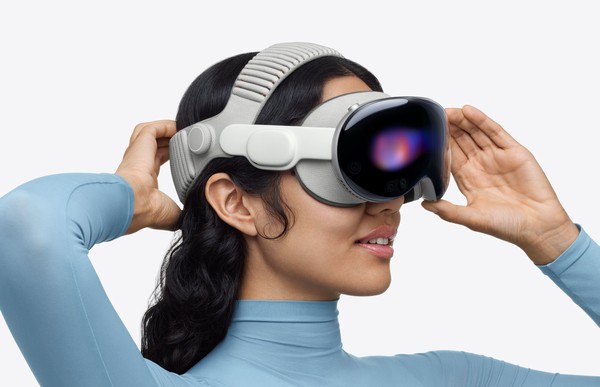
Apple Vision Pro
Apple's spatial computing headset with dual micro-OLED displays (23 million pixels), M5 chip, eye tracking, hand tracking, and the most advanced mixed reality experience available. Designed for productivity and immersive content.
Affiliate link — we may earn a commission.
Our take
The Apple Vision Pro scores 60/100 — and that number tells you everything about the vast canyon between what's technically impressive and what's actually worth buying for real-world daily use.
23 million pixels across dual micro-OLED displays that make everything else look blurry. Eye tracking and hand tracking that genuinely feel like magic from the future. The best spatial audio rendering in any headset ever made. Virtual Mac monitors floating in your living room for the ultimate productivity setup. This is, without question, the most technically advanced mixed reality hardware ever created by any company. Build quality scores 95/100, performance 90/100.
But value? A devastating 25/100 — the lowest value score in our entire database across all product categories. At $3,499, it costs 7x more than a Meta Quest 3S and 11.5x more than a Quest 3S on sale. The external battery pack lasts roughly 2 hours. It's uncomfortably heavy for extended sessions. The gaming library is tiny compared to Quest's 1000+ titles. And the "Wait for discount" momentum label with a red signal couldn't be clearer: this is not a good time to spend $3,500.
The price has never dropped from $3,499 — Apple simply doesn't discount this product. The daily utility score of 40/100 means most buyers will marvel at it for a week, then watch it collect dust on a shelf.
Bottom line: Skip unless you're a developer building spatial apps or a professional with a very specific productivity workflow — for everyone else, the Quest 3 delivers 80% of the experience at 14% of the price.
Pros & cons
What we like
- Best-in-class micro-OLED display quality
- Intuitive eye and hand tracking (no controllers needed)
- Excellent for productivity with virtual monitors
- Premium spatial audio experience
- Growing catalog of spatial apps and content
What could be better
- Extremely expensive at $3,499
- External battery pack required
- Heavy for extended sessions
- Limited game library compared to Quest
- Only sold through Apple
Key features
Who is this for?
Best for
Professionals and early adopters who want the absolute best mixed reality technology for productivity and immersive content, regardless of cost.
Not ideal for
Budget-conscious buyers, gamers (Quest 3 is better for gaming), or anyone not in the Apple ecosystem.
How it scores
Review scores

Price history (estimated)
Specifications
| display | Dual micro-OLED, 3660x3200 per eye, 23M total pixels |
|---|---|
| chip | Apple M5 + R1 |
| fov | Approximately 100 degrees |
| tracking | Eye tracking, hand tracking, head tracking, room mapping |
| audio | Spatial Audio with ray tracing |
| battery | External battery (approx. 2 hours) |
Compatibility
Standalone device running visionOS. Works with Mac for virtual display feature.