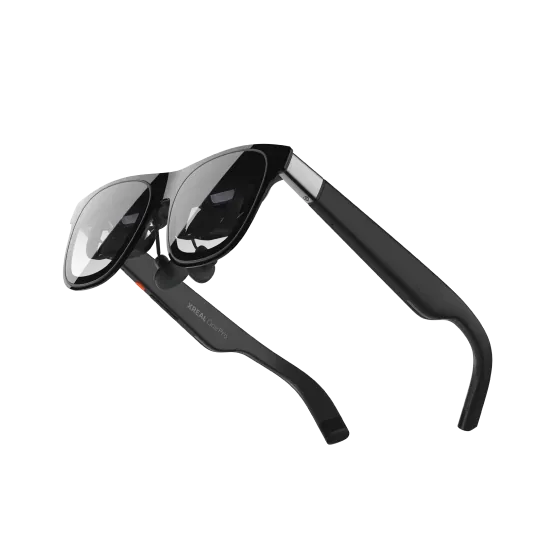
XREAL Air 2 Ultra
Lightweight AR glasses with Sony micro-OLED displays, 6DoF spatial tracking, 52-degree field of view, and titanium frame. Like a portable Apple Vision Pro at a fraction of the cost.
Affiliate link — we may earn a commission.
Our take
The XREAL Air 2 Ultra scores 77/100 and delivers something genuinely different in the AR/VR space: actual AR glasses that look like sunglasses rather than a face-mounted computer monitor from a sci-fi movie.
Sony micro-OLED displays at 1080p per eye, 6DoF spatial tracking with dual 3D sensors, 120Hz refresh rate, and a titanium frame under 80g. It's essentially a portable Apple Vision Pro experience at one-fifth the cost — a virtual 385-inch screen equivalent you can take anywhere. Build quality scores 85/100, and the wide compatibility means it works with laptops, phones, Steam Deck, Nintendo Switch, and basically anything with USB-C output.
The reality check is important: that 52-degree field of view is narrow and constantly reminds you you're looking through a window, not an immersive experience. You need a tethered USB-C connection to a device (no standalone mode whatsoever). The AR app ecosystem is still thin compared to Quest. No cameras means no mixed reality passthrough. These are fundamentally a very fancy virtual monitor you wear on your face — impressive, but limited.
At $699, it's been as low as $599 during sales events. The "Fair price" momentum label suggests you're not being gouged, but you're not getting a deal either. For a niche product with limited mainstream appeal, that price needs to come down before it makes sense for most buyers.
Bottom line: Wait for a sale under $600 if you want a portable giant virtual screen for remote work or gaming — skip entirely if you're expecting anything resembling a Vision Pro experience.
Pros & cons
What we like
- Lightweight glasses form factor (not a bulky headset)
- 6DoF spatial tracking for AR experiences
- Sony micro-OLED displays are crisp
- Titanium frame is durable and lightweight
- Works as giant virtual monitor for any device
What could be better
- Narrow 52-degree field of view
- Requires tethered connection to phone/computer
- Limited AR app ecosystem
- No cameras for mixed reality passthrough
- Prescription lens inserts needed for glasses wearers
Key features
Who is this for?
Best for
Users who want portable AR glasses for a giant virtual screen, spatial computing, and lightweight everyday wear.
Not ideal for
Users who want full VR immersion, a wide field of view, or standalone operation without a tethered device.
How it scores
Review scores
![AR Glasses 'XREAL Air 2 Ultra' Review: Hand-Tracking MR [Smart Glasses]](https://img.youtube.com/vi/vEkhcpvQIUk/mqdefault.jpg)


Price history (estimated)
Specifications
| display | Dual Sony micro-OLED, 1080p per eye, 120Hz |
|---|---|
| fov | 52 degrees |
| brightness | 500 nits peak |
| tracking | 6DoF via dual 3D environment sensors |
| frame | Titanium ring frame |
| audio | Built-in directional speakers + microphones |
Compatibility
Works with most USB-C devices including laptops, Steam Deck, and gaming consoles